Kontraktor-Jasa-Pemasangan-Peredam-Suara-Ruangan-TG-Acoustic

Spesialis Peredam Suara Ruangan Soundproofing Specialist, Accoustic Design & Interior Specialist,  Thermal Insulation

Soundproofing Contractor vs. Material Distributor: What Project Owners Need to Know

Soundproofing Contractor vs. Material Distributor: What Project Owners Need to Know

Buying from a Material Distributor vs. Ordering from a Contractor: What Is the Actual Difference?

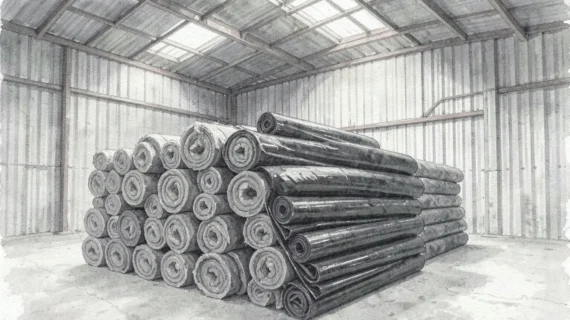
A material distributor sells you Rockwool, Glasswool, or MLV in a given quantity, and its responsibility ends at the point of delivery. Nobody on that side of the transaction checks whether the material matches your existing wall construction, the thickness your building actually needs, or the decibel-reduction target you are trying to hit. A contractor who also supplies the materials carries accountability for specification accuracy all the way through to a measured result, because if the wrong material goes in, the cost of fixing it falls on the same party.

That distinction feels minor until a project is underway. Consider a scenario that comes up fairly often: a property owner buys Rockwool from a general distributor, selects 40 kg/m³ density because that is what is available at a reasonable price, and has it installed by a standard building crew. After completion, sound still carries clearly from the adjacent room. The Rockwool is not counterfeit. The problem is that the MLV layer needed to add mass was left out, the wall cavity was not configured to the correct spacing, and the joints between panels were not sealed properly. The STC value that was expected was never reached, not because of one large error, but because of several small wrong decisions made during installation.

That is why reading the guide to selecting room soundproofing materials before deciding how to procure materials matters. Buying loose materials from a general distributor can be a sound choice if you already have a detailed acoustic design from an independent consultant, you know the exact density and thickness required, and you have an installation team with real experience in acoustic construction. Without all three of those conditions, the risk of waste is very real, and it costs more than the price difference on the materials themselves.

Which Materials Does a Large-Scale Soundproofing Project Actually Need?

Large-scale soundproofing projects do not run on a single material. An effective system is a combination of layers, and each layer performs a function that cannot simply be substituted by another. For a grounding in the technical basics of each component before you place any order, see what to understand before starting a soundproofing project.

The four materials most commonly used are:

  • Rockwool. This mineral-fibre material acts as an absorber inside wall cavities or partitions. Its main advantage is the range of densities available, typically 40 to 100 kg/m³ for acoustic applications, combined with strong moisture resistance. For that reason, Rockwool is the first choice on tropical projects such as those in Bali, where high humidity can degrade organic-based materials within a short time. Rockwool also carries fire-resistant properties that are relevant for commercial buildings subject to fire safety standards.
  • Glasswool. The working principle is similar to Rockwool, but the material is made from glass fibre. Density is generally lower and the cost per cubic metre is more economical, so it is often chosen for ceiling applications with moderate STC targets or for projects covering a large area where the budget needs to be managed carefully. It is more sensitive to moisture than Rockwool, so the choice between the two must take the building’s environmental conditions into account.
  • Mass Loaded Vinyl (MLV). This thin, high-density vinyl sheet works on a different principle from the previous two materials. MLV adds mass to a partition without adding significant thickness, and mass is one of the most important factors in blocking sound transmission. It is effective on thin partitions, floors, or in situations where space is very limited but isolation is still required. The international sound isolation testing standard, including ISO 717-1, measures material performance within a complete construction system, not in isolation.
  • Layered gypsum board. This is the finishing surface that also contributes to the total mass of the system. Two or three layers of gypsum board installed with staggered joints are significantly more effective than a single thick layer, because each offset joint interrupts a path for structure-borne sound transmission.

The specification of each material, including density, thickness, and number of layers, can only be confirmed after a site survey and the setting of acoustic targets. Ordering based on rough estimates risks getting the volume wrong in both directions: too little, so the target is not reached, or too much, so budget is wasted.

How Do You Determine Material Specifications Before Ordering?

The correct sequence is: audit the existing building first, then set the decibel-reduction target based on how the space will be used, then calculate the volume and material grade required. Ordering materials before a survey is the most common source of waste in large-scale soundproofing projects. Rockwool density that is too low, an MLV layer that is skipped, or an incorrectly spaced cavity will not show up on a delivery invoice, but they will be clearly apparent in the final acoustic result.

A structured specification process runs in four steps:

  1. Existing building audit. This covers the condition of walls already in place, including their structural material, whether brick, concrete, or light steel framing. The joints between elements, the position of gaps around pipes and cables, and the thickness of existing partitions all affect the choice of system. A gap as small as 1 cm around a door frame can eliminate most of the isolation benefit from an otherwise well-built wall.
  2. Setting the decibel-reduction target. The function of the space determines what is realistic. A meeting room that needs to protect the confidentiality of conversations requires a different standard from a hotel room that simply needs to reduce corridor noise. This target is expressed as an STC or Rw value depending on which standard applies.
  3. Calculating material volume and thickness. Only after the first two steps are complete can the actual volume be calculated with adequate accuracy. This also determines whether the project needs Rockwool at 60 kg/m³ or 80 kg/m³, one layer of MLV or two, and how many sheets of gypsum board per surface.
  4. Building the cost plan. The calculated material volumes go into the project cost plan alongside labour costs and supporting components. For a reference on typical soundproofing installation costs per square metre, that resource can help you estimate budget scale before entering a formal survey.

TG Acoustic’s survey and cost-planning service is designed to work through all four of these steps before any material is ordered or delivered to the project site.

Which Projects Most Consistently Require Materials at Large Volume?

High-volume material requirements arise when a project covers many units or many rooms being treated at the same time. The segments that most consistently generate B2B demand at this scale include:

  • Villas and resorts in Bali. Premium hospitality properties in Bali are frequently built in clusters of tens to dozens of units. Each unit requires sound isolation between rooms, isolation from service areas, and sometimes isolation from external noise such as roads or entertainment venues. When work is carried out simultaneously across units, material volume and delivery coordination become primary considerations.
  • Office buildings with meeting rooms. An office with dozens of meeting rooms or executive suites requires a consistent speech-privacy standard across every space. This is not only a comfort issue but also one of compliance with corporate information-privacy standards.
  • Home theatres and karaoke rooms in residential developments. Premium housing developers in Jabodetabek frequently include acoustic installation as part of a finishing package. When a single development has many units with the same room type, concurrent installation reduces mobilisation time and ensures consistent specifications across units.
  • Projects at IKN Nusantara. The construction of office and meeting facilities at IKN Nusantara has opened a new segment for building acoustic work at a significant scale.

Jabodetabek and Bali remain the two main service centres, but projects outside those areas, including Bandung and IKN, are actively handled with a mobilisation arrangement tailored per project.

What Should You Check Before Choosing a Distribution Partner or Contractor for a Soundproofing Project?

Choosing a partner for a soundproofing project is not simply a question of material price per roll or per sheet. The following practical checklist is relevant before signing any contract:

  1. Portfolio of comparable projects. Ask for examples of projects similar to what you are planning, both in terms of room function and scale. A contractor with a strong track record in residential home theatres does not necessarily have equivalent experience in multi-storey office buildings, and vice versa.
  2. Acoustic testing and handover process. There is a significant difference between a contractor who considers the job complete when the physical installation is finished and one who carries out acoustic measurements before handing the project over. Without acoustic testing, there is no objective way to verify that the targets agreed at the start have actually been met.
  3. Material datasheets and certifications. Every material installed should come with a technical datasheet showing density, absorption coefficient, and fire resistance class where relevant. This is important for projects that require technical documentation, including commercial projects subject to building standards.
  4. Specification consistency across batches. For multi-unit projects executed in phases, confirm that the partner can guarantee that materials delivered in phase two and three carry the same specifications as phase one. Density variation between batches can produce inconsistent acoustic performance across units.

If you are ready to evaluate your project requirements in concrete terms, the most efficient next step is to start with a project consultation before committing to any volume or material type.

Service Coverage: Jabodetabek, Bali, Bandung, IKN, and All of Indonesia

TG Acoustic covers projects across Indonesia, with two primary areas served on a regular basis: Jabodetabek and Bali. Free site surveys apply to projects in the Jabodetabek area, subject to terms and conditions confirmed during the initial consultation.

Bali is the second primary market, particularly for villa, resort, and premium hospitality property projects. Bandung and IKN Nusantara are explicitly named as areas being actively served, in line with growth in residential and commercial projects at both locations.

For projects outside the primary service areas, work begins with a remote consultation or a paid survey before the team is mobilised to site. Mobilisation and material delivery costs are not quoted as fixed figures, since they depend on project volume, site distance, and the appropriate shipping method. All of these components are included in the cost plan after the initial consultation is complete.

FAQ: Common Questions About Soundproofing Materials and Projects

Does TG Acoustic sell soundproofing materials without installation?
TG Acoustic operates as a soundproofing contractor, not a loose materials distributor. Material orders are tied to a site survey and project design so that what gets delivered matches your building conditions and acoustic targets. Buying materials without that project context carries a real risk of not reaching the results you expect.
Which soundproofing materials are most commonly needed for large-scale projects?
Large-scale projects typically combine Rockwool or Glasswool as the absorption layer inside wall cavities, MLV to add mass to thin partitions, and multiple layers of gypsum board as the final surface. The proportion of each is determined by the target STC value and existing construction conditions, not by what happens to be in stock.
What is the minimum order volume for a project?
There is no fixed minimum, but projects that require a site survey and acoustic design typically involve at least several hundred square metres of treated surface area. The actual volume is calculated after the survey and is set out in the project cost plan.
Does the service cover material delivery outside Jabodetabek and Bali?
Yes, projects across Indonesia can be handled. Free site surveys apply to the Jabodetabek area subject to terms and conditions. For Bali, Bandung, IKN Nusantara, and other regions, mobilisation and delivery costs are quoted per project after the initial consultation, since they depend on volume, distance, and the appropriate shipping method.
What is the difference between noise control and acoustic treatment in a project context?
Noise control stops sound from transmitting between spaces or from outside, using mass and isolation. Acoustic treatment manages sound quality inside a room by absorbing or diffusing reflections. Large-scale projects often require both at the same time, for example a hotel that needs to separate noise between guest rooms while also ensuring speech quality in meeting spaces.
What is the project process from first contact to handover?
The process runs in four stages: site survey and building diagnostics, acoustic design and cost planning, installation by a specialist team, then acoustic testing and handover. For B2B or multi-unit projects, the design and cost-planning stage involves a more detailed discussion of material specifications before anything is ordered or shipped.

Conclusion

The difference between buying materials from a general distributor and ordering from a contractor who also supplies them is not simply a matter of price or logistical convenience. The difference lies in where accountability ends. When materials, design, and installation are in the same hands, one party is fully responsible for a measured acoustic result, not just for goods that arrive at a warehouse.

For projects of significant scale and value, whether a villa complex in Bali, an office building in Jabodetabek, or a new facility at IKN Nusantara, an approach that begins with a site survey and building audit is the only way to confirm that the material volume ordered is the volume that is actually needed.

If your project is already in the planning stage or you are evaluating specifications for the next phase, start with a project consultation to get a clear picture before any procurement decisions are made.
Where to Buy Rockwool for Soundproofing: How to Choose the Right Spec and When to Hire a Contractor

Where to Buy Rockwool for Soundproofing: How to Choose the Right Spec and When to Hire a Contractor

Rockwool is usually the first material that comes up when someone starts researching soundproofing for a room. But there is a wide gap between buying rockwool yourself at the nearest building supply store and handing the entire project to a contractor, and many of the most important considerations get missed along the way. This article explains what the material actually does, how to choose the right specification, and when buying it yourself genuinely makes sense in terms of cost and outcome. If you are not yet sure where to start, it is worth reading what you need to understand before starting a soundproofing project before getting into material selection.

Why Rockwool Is the Core Material in Soundproofing Projects

Rockwool is made from mineral fibres produced by melting basalt rock or steel slag at very high temperatures. Its randomly arranged, porous fibre structure allows sound waves to enter the material and lose energy through friction, a process known in acoustics as absorption. The same structure also slows heat transfer, so rockwool doubles as thermal insulation.

Those two functions sound complementary, but the installation method is different for each, and this is the point most commonly misunderstood. Rockwool for acoustic purposes is installed inside a construction cavity, for example between the frames of a double wall or inside a ceiling frame, not applied directly to a wall surface like a decorative layer. If you simply attach it to a surface without integrating it into a construction system, the effect is limited to reducing echo inside the room. It will not block sound from entering or leaving.

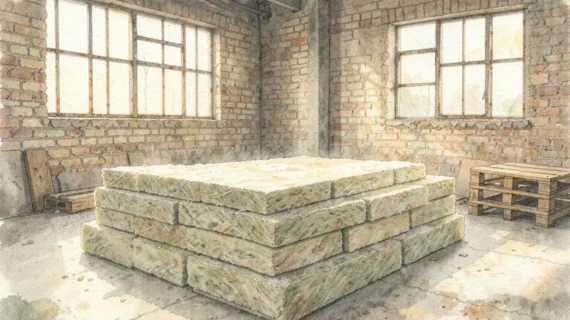
In the Indonesian market, rockwool is generally available in slab form (rigid boards) or roll form, with densities ranging from 24, 40, 60, to 80 kg/m³. Density is not just a technical figure. It determines whether the product you are buying is appropriate for acoustic applications or is only effective as roof thermal insulation. Before purchasing, understand what that number means for your specific room requirements.

What Rockwool Density Do You Need for Room Acoustic Applications?

For room soundproofing, rockwool with a minimum density of 60 kg/m³ is the commonly accepted starting point. Densities below 40 kg/m³ are better suited for roof or thermal insulation rather than absorbing sound waves in the mid and low frequency ranges. Thickness also matters: a 50 mm layer at 60 kg/m³ delivers better bass frequency absorption than a thinner layer at higher density. The decibel reduction a wall system achieves depends on the entire construction, not on the rockwool alone.

To understand why lower density performs poorly acoustically, picture fibres that are more loosely packed: sound waves pass through with less resistance, so less energy is absorbed. The denser fibre structure at 60 to 80 kg/m³ creates greater resistance, particularly for mid frequencies such as vocals and instruments, and for low frequencies such as bass from a subwoofer.

One point worth stating clearly: no specific decibel reduction figure can be guaranteed simply by specifying rockwool density. Sound isolation performance is a result of the entire construction system, including wall thickness, the number of gypsum layers, the presence or absence of Mass Loaded Vinyl, and the tightness of all joints. Technical references such as those published by Isover on acoustic performance consistently show that material effectiveness is always measured in the context of a system, not a single component.

Rockwool vs Glasswool: Which Is Better for Soundproofing Walls?

This question comes up regularly in the planning stage. The answer is not absolute because project conditions determine which choice is better.

Rockwool has a significantly higher melting point than glasswool, making it more fire resistant. Its fibres are denser and more moisture resistant, two properties that are directly relevant in a humid tropical climate such as Bali or coastal areas. Its price per square metre is slightly higher at equivalent specifications.

Glasswool is lighter and easier to cut and fit into narrow cavities. It is more affordable and more widely available in the market. At equivalent density, its acoustic effectiveness is not significantly different from rockwool for standard wall applications.

For projects in Bali where humidity is high, rockwool’s moisture resistance makes it the safer long-term choice, particularly in construction that is difficult to access once completed. For projects in Greater Jakarta under standard conditions, either material can work depending on the budget and the technical specifications established after a site survey. Choosing a material without considering the entire wall system is one of the common mistakes that cause soundproofing projects to fail.

Where to Buy Rockwool and What to Check Before You Purchase

Rockwool is available at large building supply stores, insulation distributors, and various online marketplaces. TG Acoustic is not a material retailer, so this section is written purely as a guide for readers who want to understand how to buy correctly before deciding on their project approach.

Three things must be checked before buying:

  • The density label on the packaging. The density figure must be stated explicitly on the product packaging, not just mentioned verbally by the seller. If the packaging does not show the density, treat the product as standard insulation that may not be suitable for acoustic use.
  • Product dimensions and specification. Check whether the product is sold as individual slabs of fixed dimensions or as a roll. Calculate the total surface area you need to cover before purchasing so you do not end up with too much or too little material.
  • Intended application. Some rockwool products are explicitly designed for roof or external wall insulation, not for acoustic interior construction. Confirm that the product specification matches the application you have planned.

One important note on purchase economics: buying small quantities for a DIY project is almost always more expensive per square metre than procurement through a contractor who has direct access to distributor pricing. The difference can be significant, particularly for supporting materials such as framing, MLV, and gypsum board. For a fuller picture of material options and suppliers, the guide to choosing soundproofing materials and contractors provides useful additional reference.

When Buying Rockwool Yourself Saves Money and When a Contractor Is More Efficient

Buying rockwool yourself makes sense for small projects involving a single wall or a single panel, if you already understand the installation process and do not need measurable acoustic results. A contractor is more efficient for a full room because the contractor procures rockwool, MLV, framing, layered gypsum, and sealant as one package at distributor pricing. For a studio, karaoke room, or home theater, the total cost of self-procurement and self-installation almost always exceeds the contractor package price, which already includes a results guarantee.

This is not purely a question of technical ability. Even readers experienced in construction work need to run an honest total cost calculation. Rockwool alone is not sufficient. An effective soundproofing wall system requires metal or timber framing, rockwool inside the cavity, a Mass Loaded Vinyl layer, and at least two layers of gypsum board with airtight joints. When priced at retail unit rates, the total material cost frequently approaches or exceeds the contractor package price, which already includes labour.

To help with budget planning before a site survey, you can review the typical cost range for soundproofing installation services as an initial reference point. Those figures are ranges, not fixed prices, because every project has different building conditions and acoustic targets.

How Material Procurement and Installation Work in a TG Acoustic Project

In TG Acoustic’s four-stage process, material selection and procurement are part of the service, not a task passed on to the client. Once the survey and diagnostic stage is complete, the team prepares a detailed cost plan that covers full material specifications: rockwool density matched to the room’s acoustic targets, MLV thickness, the number of gypsum layers, and all relevant construction details.

Clients do not spend time comparing densities across brands on marketplaces, arranging material delivery to site, or second-guessing whether the specification they purchased is correct. All components arrive in a single procurement at distributor pricing and are installed by a team experienced in the correct construction sequence.

For projects in Greater Jakarta and Bali, this process runs on a standardised workflow. For other regions outside those two main areas, material procurement is adjusted to local logistics conditions and discussed specifically during the initial consultation.

If you are considering a studio, karaoke room, home theater, or meeting room project, the most efficient starting point is a survey, not a building supply store.

FAQ: Common Questions About Rockwool for Soundproofing

Is rockwool sold at general hardware stores suitable for soundproofing?

Not always. Most rockwool stocked at general hardware stores is a roof insulation product with a density of 24 to 32 kg/m³, which is effective for thermal insulation but not optimal for absorbing sound waves. For room acoustic applications such as studios or karaoke rooms, you need rockwool with a minimum density of 60 kg/m³. Always check that the product label states the density explicitly before purchasing.

How thick does rockwool need to be for a soundproofing wall?

The thickness commonly used in soundproofing wall construction is 50 mm to 100 mm, depending on the frequency range you need to control. For bass and low frequencies from drums or subwoofers, thicker layers produce better results. Thickness must be matched with the right density because thin rockwool at high density is not always better than thicker rockwool at medium density for low-frequency performance.

Is rockwool alone enough to soundproof a room?

No. Rockwool is an absorption component that helps attenuate sound within the construction cavity, but it cannot achieve significant sound isolation on its own. An effective soundproofing wall system requires a combination of materials: rockwool inside the cavity, a Mass Loaded Vinyl layer for added mass, and layered gypsum board as the hard outer shell. Without that combination, rockwool only reduces reverberation inside the room rather than blocking sound from entering or leaving.

Can rockwool be installed without hiring a contractor?

Technically yes, for the portion that involves placing rockwool inside the wall frame cavity, provided you have the tools and a basic understanding of construction. However, optimal acoustic results require tight joints, careful handling of gaps at corners and door frames, and supporting material layers installed in the correct sequence. An error in one layer can cancel the effectiveness of the entire system. For rooms used commercially or where measurable results are required, work by a specialist contractor is more reliable.

Is rockwool safe to use inside an enclosed room?

Yes, as long as it is installed inside the construction cavity and not directly exposed to the room’s air. Rockwool installed behind gypsum board or another covering material poses no health risk to occupants. The precaution applies during installation: wear a mask and gloves because the mineral fibres can irritate skin and the respiratory tract if inhaled while work is in progress.


Rockwool is the right material for a soundproofing project when it is selected at the correct specification and installed as part of a complete construction system. Buying it yourself can make sense at a small scale, but for a full room with a defined acoustic target, a survey-based approach almost always produces a more cost-efficient outcome and a more reliable result.

Discuss your soundproofing material and installation requirements with the TG Acoustic team through this consultation form.

Studio Soundproofing: How It Works, the Right Materials, and the Correct Installation Order

Two Separate Problems That Are Routinely Treated as One

Most studio design mistakes start here: the owner assumes one solution covers two problems that actually have different causes and different fixes.

What is the difference between noise control and acoustic treatment for a studio?
Noise control is the work of isolating a room from outside sound, or preventing sound from leaking out. Acoustic treatment is the work of controlling reflections inside a room so it does not ring or echo excessively. A serious studio needs both at the same time: good isolation keeps bass from leaking to the neighbors, while proper treatment makes recordings sound clean without room-echo artifacts.

Consider a studio in a Bali villa: double-layer thick brick walls, ventilation open to the garden, and a high ceiling typical of tropical architecture. The owner reports that vocal recordings sound reverberant and “like a bathroom.” The problem is not isolation. There is simply no acoustic treatment. Reflections off hard walls and the high ceiling create a long reverb tail that destroys recording clarity.

Then there is a premium Jakarta apartment studio covered wall to wall in foam panels. The kick drum and bass guitar are still clearly audible in the adjacent unit. Foam panels reduce echo inside the room, but they carry no mass to stop low-frequency energy from passing through concrete. That is a noise control problem, and acoustic treatment does not solve it.

These two cases are not exceptions. They are the most common pattern when a room is finished and the result does not meet expectations. Understanding the difference between the two problems is the first step before choosing any material or construction method.


Studio Soundproofing Materials: What Each One Does and Why You Choose It

Material selection is not about brand or price per sheet. It is about where the material is placed and which frequencies need to be addressed. Below are the four primary materials used in studio projects, with their function and installation position.

Rockwool

Rockwool is a mineral fiber made from basalt rock or slag steel. At a density of 60 to 80 kg/m3, it absorbs mid-to-high frequency sound energy inside wall cavities. Rockwool is not applied directly to a visible wall surface. It is packed into the cavity between two structural layers. A thickness of 5 to 10 cm inside an air cavity provides meaningful absorption, particularly at frequencies of 500 Hz and above.

Glasswool

Glasswool operates on the same principle as Rockwool but weighs less. It is more commonly used in suspended ceiling construction or lightweight partitions where structural load is a consideration. Like Rockwool, glasswool has limits at very low frequencies. Both are absorptive materials, not mass barriers.

Mass Loaded Vinyl (MLV)

MLV is a thin, high-mass layer that acts as a sound barrier, not an absorber. It is added between gypsum layers or at the wall surface to increase mass without sacrificing too much total wall thickness. MLV is most relevant when the isolation target includes low frequencies below 250 Hz, because low-frequency energy requires mass to stop it. Combining Rockwool in the cavity with MLV on the surface layer outperforms doubling the thickness of either material alone.

Layered Gypsum

Gypsum is not an absorptive material. It is a cladding material that adds mass and stiffness to wall construction. In studio design, gypsum is typically installed in two or more layers, with MLV in between. This approach significantly increases the wall’s Sound Transmission Class (STC) compared to a single gypsum layer. The seams between layers must also be staggered so there is no aligned weak point running through the wall.

To understand how each of these elements interacts, read the full guide on acoustic components of a music studio room, which covers each layer in greater detail.


Why Installation Order Determines the Outcome

This is the step most often ignored in studio projects that proceed without acoustic planning. Construction sequence is not a matter of preference. It is a matter of physics.

The Room Within a Room Principle

A studio that requires full isolation is built on the principle of a room within a room: a construction box that sits on a foundation decoupled from the original building structure, with walls that do not touch the existing walls, and a ceiling that does not connect directly to the building’s ceiling. This principle cuts off the path of structural vibration transmission.

The sequence cannot be reversed:

  1. The floor is decoupled first. A floating floor is built on a vibration isolation layer before the new studio walls are erected. If the walls go up first and touch the original floor, all vibration from inside the studio will travel into the building structure.
  2. The new walls are built on top of the floating floor. These walls must not touch the existing walls. The air gap between them is part of the isolation system, not a construction error.
  3. The suspended ceiling is built last. Resilient hangers ensure the studio ceiling does not transfer sound to the building ceiling above it.
  4. Acoustic treatment is installed after the isolation construction is complete. Acoustic panels, absorbers, and diffusers go on the surfaces of the already-isolated room, not before.

Installing acoustic panels by type and function over an existing wall does not fix sound leakage. Acoustic panels only correct echo inside the room. If the isolation construction is not in place, sound will continue to leak out even if every wall surface is covered with panels.

Without decoupling, a floating floor, and double-leaf construction executed in the correct order, no amount of material spending will produce meaningful isolation.


Studios in Existing Buildings: Constraints to Understand from the Start

A new build gives you the freedom to plan acoustics from scratch. An existing building brings compromises that must be understood early so that expectations stay realistic.

Constraints in Existing Villas and Houses

Bali villas typically have open ventilation, solid brick walls with no cavity, and timber-framed ceilings that are not easy to modify. Adding a studio to this kind of building allows for a significant improvement in isolation, but the result will not equal a building designed acoustically from the ground up. The ceiling cannot be dropped too far because headroom is already limited, and existing concrete walls are not easily retrofitted with cavities without partial demolition.

Constraints in Premium Apartments

Apartments carry two related constraints. First, building management rules commonly prohibit structural changes, drilling at certain points, or adding floor loads beyond design tolerance. Second, the existing concrete structure transmits sound through mass and structural vibration, not just through air. An ideal floating floor requires both space and permissions that are often unavailable.

What is achievable in an existing building is meaningful reduction, not total isolation. This is not a design failure. It is a physical and regulatory limitation that needs to be communicated before the project starts, not after the final measurement is taken.

Industry standards used to measure the performance of recording rooms can be referenced from the International Society of Acoustics guidelines as an independent technical reference.


When to Survey Before Choosing Any Material

The short answer: before buying anything.

Choosing materials without a site survey risks inefficient spending. Rockwool purchased in large quantities will not perform as expected if the wall cavity is not planned correctly. MLV installed without understanding the main sound leakage paths will only fix a small part of the problem.

A survey examines things that cannot be assessed from photos or floor plans, including:

  • Existing wall and floor materials, including whether cavities already exist or can be created
  • Weak points for sound leakage: doors, ventilation, structural joints, and electrical or pipe conduit paths
  • A realistic RT60 target for the type of studio planned, whether a dead room, a live room, or both
  • Physical room constraints: minimum ceiling height after construction, and how much wall thickness can be sacrificed for isolation cavities

If you are planning a recording room or music studio, start by reading more about music studio soundproofing services to understand the scope of available work before deciding on the next step.

TG Acoustic provides free surveys for the Jabodetabek area. For Bali and other cities, surveys are available by prior scheduling. Schedule a free Jabodetabek survey and get a clear picture of your room’s condition before committing to any material or construction method.


Frequently Asked Questions

Are egg-crate foam or pyramid foam panels enough for a recording studio?

No. Egg-crate and pyramid foam panels absorb only part of the energy in mid and high frequencies and carry no mass to stop sound from passing through walls. These materials can reduce light echo in a very small room, but they will not meet any reasonable recording studio standard because low frequencies and structural leakage are left completely unaddressed. Proper studio work starts at wall construction, not at the wall surface.

How thick should Rockwool be for a studio wall?

Rockwool for studio walls typically runs 5 to 10 cm thick, at a minimum density of 60 kg/m3, to absorb mid-range frequencies effectively. Thickness alone is not enough: the Rockwool must sit inside an air cavity between two wall layers, not applied directly to a surface. The exact figure depends on your target dB reduction and the frequencies causing the problem, which can only be confirmed after a site survey.

Can a studio in an apartment be completely soundproof?

Relatively, not absolutely. Apartments have two core constraints: building management rules that restrict structural changes, and existing concrete structure that carries sound through mass and vibration. What is achievable is significant reduction, not total isolation. Floors are especially difficult because a floating floor requires space and is often prohibited by management. A consultation with baseline measurements is the realistic first step before setting any target.

What is decoupling and why does it matter for a studio?

Decoupling means breaking direct contact between two building surfaces so that vibration cannot travel structurally. Examples include a studio wall built on a rubber vibration pad, or a ceiling hung on resilient hangers so it does not connect to the building’s original ceiling. Without decoupling, bass and instrument vibration from a subwoofer will travel through the building structure even if the walls are filled with absorptive material.

When do I need Mass Loaded Vinyl in addition to Rockwool?

MLV is needed when the isolation target covers low frequencies, especially bass below 250 Hz. Rockwool works well for mid and high frequencies but has limits at low frequencies because that energy requires mass to stop it, not fiber. MLV is added as a barrier layer on top of or between gypsum layers, adding mass without sacrificing too much wall thickness. The combination of both outperforms doubling the thickness of either material alone.


Next Steps

A studio that works is not about the most expensive materials or the most panels. It is about the correct sequence: structural isolation planned before construction begins, materials chosen to match the problem frequencies, and acoustic treatment installed after isolation is complete.

If you are planning a studio in a villa, house, or apartment and are not yet sure where to start, a room condition survey is the most efficient starting point. Knowing your building’s limitations before choosing materials is far better than finding out after everything is installed.

Schedule a free Jabodetabek survey and consult on your studio room with the TG Acoustic team. For Bali and other cities, scheduling is available through the consultation form.

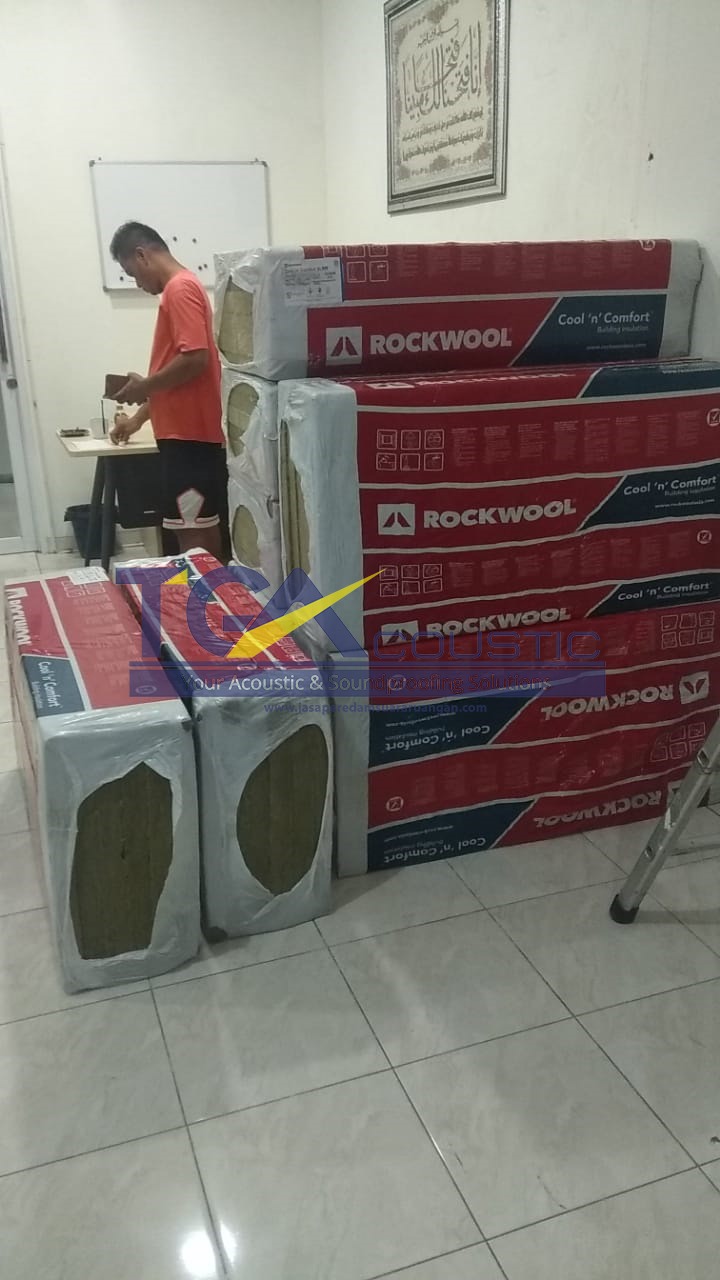
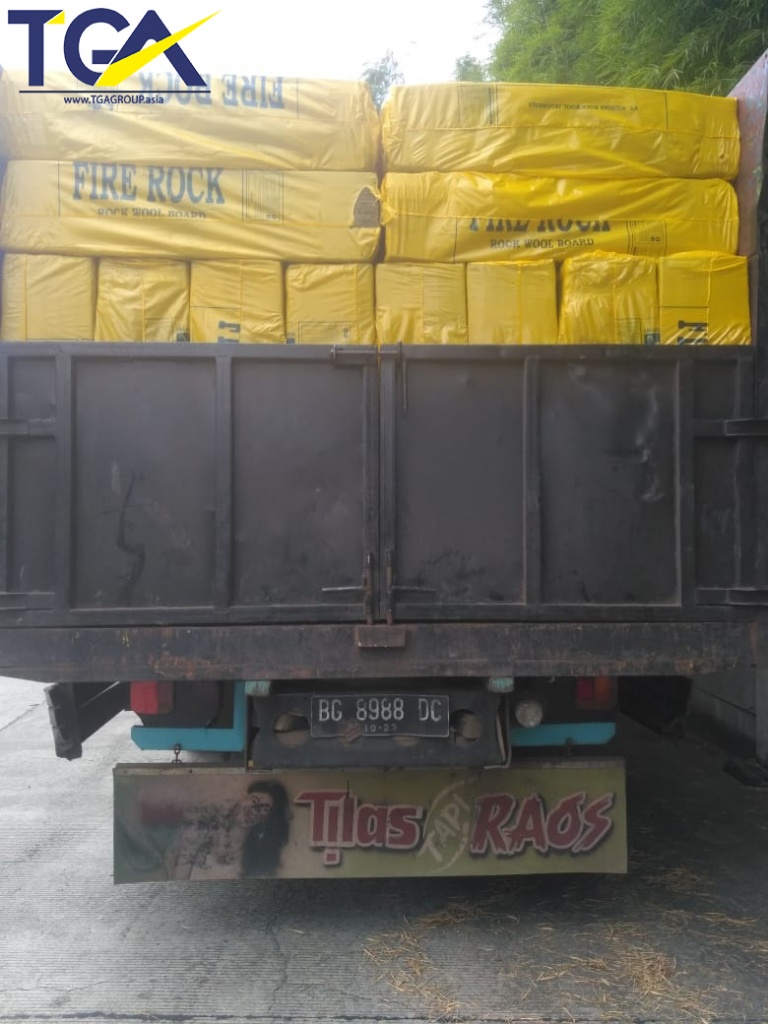
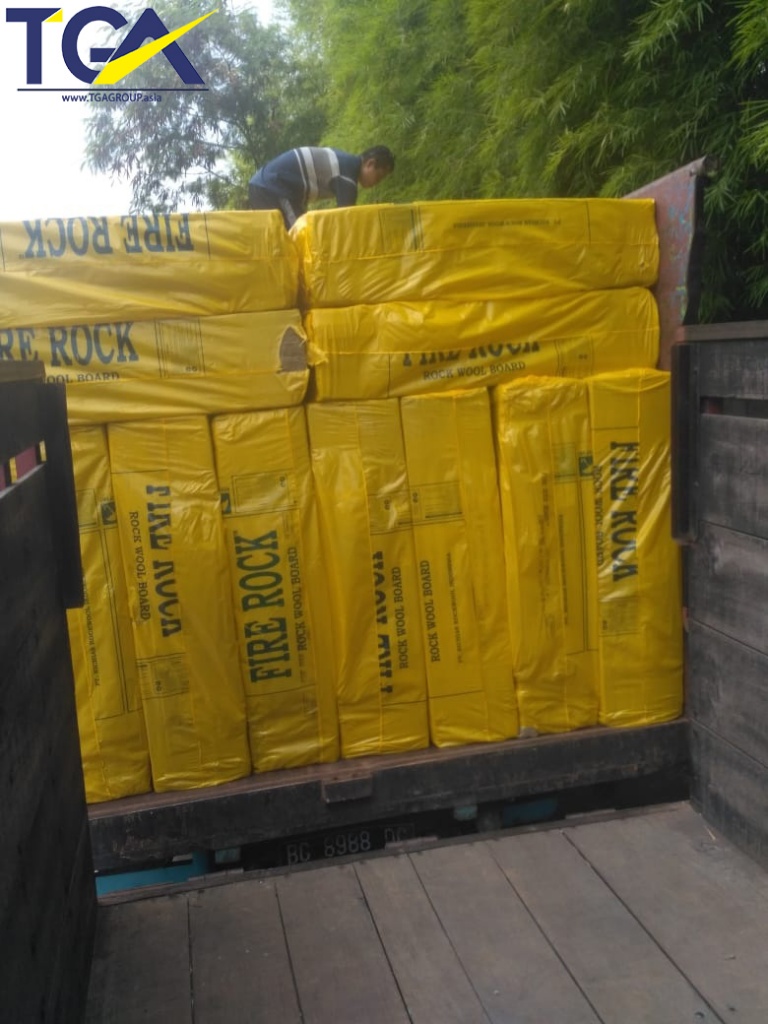
Terpercaya Pembelian Rockwool D. 80 Kg/M3 Bapak Hadi di Depok

Terpercaya Pembelian Rockwool D. 80 Kg/M3 Bapak Hadi di Depok

Nama Klien: Bapak Hadi

Jenis Project: Pembeliaan Rockwool 2 Ball

Spesifikasi: D. 80 Kg/M3 1200 x 600 x 25 mm

Lokasi Project: Perumahan Cibubur, Depok

Tanggal Pelaksanaan: 09-03-2021 s/d 09-03-2021

Jasaperedamsuararuangan.com – Peredam suara ruangan berkualitas baik merupakan bahan yang mampu untuk meredam suara dari luar agar tidak masuk ke dalam dan juga meredam suara dari dalam agar tidak bocor keluar. Bahan dasar peredam suara yang baik juga dapat meningkatkan kualitas suara di dalam ruangan menjadi lebih jernih, jelas, dan tidak bergema.

Peredam suara biasanya digunakan sebagai bahan tambahan untuk ruangan-ruangan khusus seperti ruang rapat, ruang karaoke, studio musik, ruangan rekaman lagu, dan lain-lain. Ruangan seperti itu harus di desain khusus menggunakan peredam suara agar kualitas suara yang ada menjadi lebih baik.

Karena fungsinya yang begitu penting bahan peredam suara memiliki harga yang cukup fantastis. Harga-harga tersebut disesuaikan lagi dengan kemampuan bahan meredam suara. Semakin tinggi kemampuan bahan maka semakin mahal harga bahan peredam itu.

Mengenal Material Peredam Suara Ruangan

Sebelum memasang peredam suara, tentu Anda wajib mengetahui bahan yang bisa digunakan. Beberapa bahan memiliki kelebihan yang bisa dimanfaatkan sesuai dengan kebutuhan penggunanya.

  1. Rockwool dan Glasswool

Rockwool ini merupakan bahan yang bisa dibilang memiliki rata-rata jual termurah dibandingkan bahan lainnya. Meski begitu kualitas peredam yang dihasilkan lumayan baik bahkan mampu menjadi bahan isolator panas yang hebat. Bahan ini umumnya terbuat dari serat mineral bebatuan, itulah mengapa bahan ini tidak mudah terbakar.

Glasswool merupakan bahan yang hampir serupa dengan rockwool dari segi harga, kelebihan, dan keunggulan. Bedanya hanya terletak pada bahan dasar pembuatnya, glasswool terbuat dari bahan serat mineral serpihan kaca. Kedua bahan ini mampu bertahan disuhu ruangan yang relatif tinggi yaitu 100-820oC.

  1. Greenwool

Bahan perlengkapan insulasi peredam satu ini satu tingkat dibandingkan kedua bahan sebelumnya. Greenwool umumnya terbuat dari bahan polyester yang ramah lingkungan dan tidak beracun. Bahan ini juga tidak gatal apabila dipegang, tidak mudah rontok, dan lebih tahan terhadap jamur.

Importir Rockwool

3. Softboard

Berbeda dengan bahan atau material peredam suara ruangan lainnya, softboard biasanya terbuat dari serpihan kayu. Bentuknya mirip papan kayu tebal yang lebih artistik sehingga bisa menambah kesan mewah pada sebuah ruangan. Kelebihannya yaitu tahan terhadap beban yang cukup berat.

4. Panel Akustik

Panel Akustik merupakan bahan peredam terbaru yang biasanya di rancang secara matematis sehingga memiliki kualitas anti gema dan anti dengung yang baik. Bahan ini berbentuk unik sehingga mampu dijadikan sebagai hiasan ruangan sekaligus. Panel ini ada banyak macamnya, berikut penjelasannya.

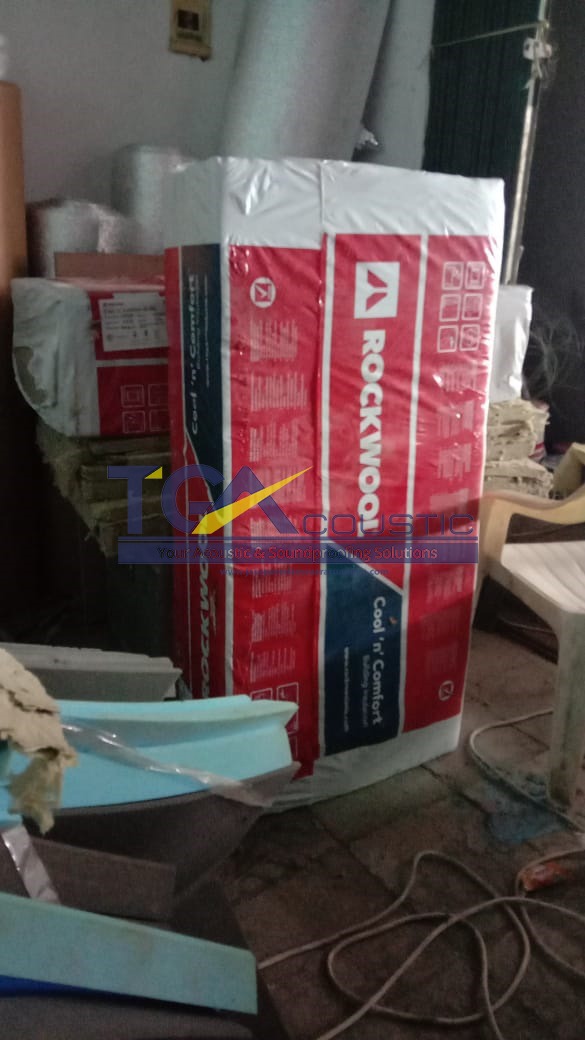
Dan itu juga yang dilakukan Bapak Hadi telah melakukan pembelian Rockwool ke jasaperedamsuararuangan.com sebanyak 2 Ball dengan density 80 Kg/M3, dengan ukuran 25x600x1200 mm.

Dengan ini jasaperedamsuararuangan.com telah mewujudkan kebutuhan yang kami berikan kepada Bapak Hadi, Depok dalam Pembeliaan Rockwool.

Permasalahan ruangan Anda akan ditangani orang yang profesional khusus dibidangnya dan jasaperedamsuararuangan.com juga telah berpengalaman menangani begitu banyak proyek peredam suara dan gema suara. Jasaperedamsuararuangan.com akan memastikan setiap proyek anda berjalan dengan baik.

Kunjungi website official Dewaperedamruangan.com

Di https://www.jasaperedamsuararuangan.com/

Atau Anda Bisa Menghubungi Jasaperedamsuararuangan.com di

0813 1907 0134

Kami selaku Vendor, Distributor, dan Supplier Rockwool Peredam Suara juga menyediakan Tukang spesialis Pemasangan dan Pembuatan untuk perihal biaya atau Harga Jasa Pasang  jasaperedamsuararuangan.com menggunakan tarif harga Per meter persegi.

Percayakan kepada jasaperedamsuararuangan.com untuk menangani kebutuhan Anda terhadap akustik suara ruangan, akustik suara ruangan, akustik suara ruangan, pemasangan peredam akustik suara

Copyright © 2026 TG Acoustic - Spesialis Peredam Suara Ruangan